Generational Trauma in African American Families: Causes and Healing
A plain-language guide to generational trauma in Black families: what it means, the history and research behind it, the best books to start with, and practical first steps toward healing, for yourself and for the people you love.

Linda Landum, RN, MSN-Ed, MA
Founder, Shrewd Wit Inc.
— Intergenerational Trauma
Many of us grew up in families that were loving and fierce and tired, families that survived things no one would talk about. If you have ever wondered why a grandmother never rested, why a father could not say the words, or why you still brace yourself when life is good, you are already asking about generational trauma.
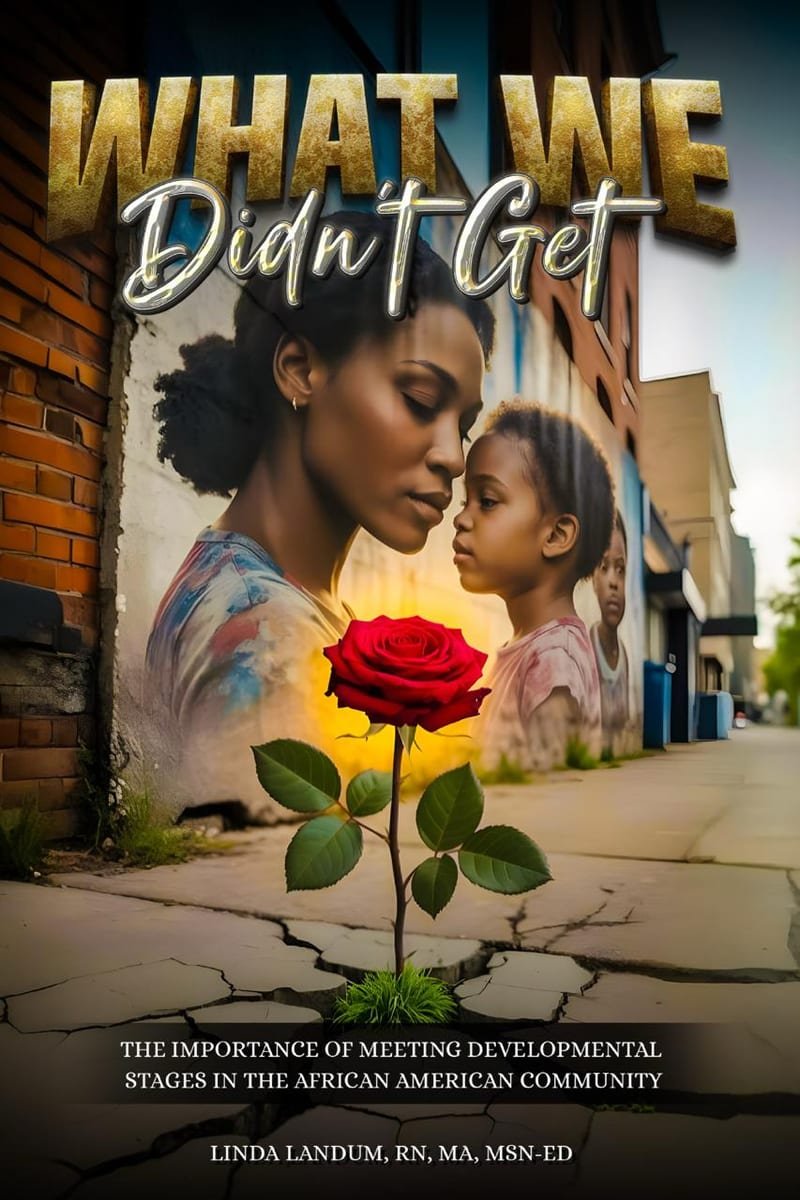
This guide answers the questions people ask most often about generational trauma in African American families, in plain language. It draws on the developmental framework of my book, What We Didn't Get: How Poverty, Racism, and Trauma Interrupted Black Development, and on the researchers and writers who have shaped this field.
What is generational trauma in African American families?
Generational trauma, also called intergenerational or transgenerational trauma, is the passing of trauma's effects from one generation to the next. A parent who lived through violence, loss or chronic danger may parent from a nervous system still on alert, and children absorb that alertness long before they have words for it. The original event may be generations old; its echoes are present in the room.
For a general definition with everyday examples and signs, see what is generational trauma.
In African American families, the trauma is both personal and collective. It reaches back to slavery, through Jim Crow, lynching, redlining and mass incarceration, and it continues in everyday racism today. That is what makes it different from a single painful event: it is historical and ongoing at the same time.
A short history
For roughly 250 years, enslaved Africans in what became the United States were denied the most basic conditions for healthy development: safety, the ability to keep families together, the right to learn to read, and control over their own bodies. Emancipation was followed by nearly a century of legal segregation and racial terror, then by housing, lending, schooling and policing policies whose effects still shape where families live and what they can pass on.
Each era left families adapting to danger. Many of those adaptations, such as staying quiet in front of authority, toughening children early, and never letting your guard down, kept people alive. They were also passed down long after the specific danger changed, sometimes at the cost of closeness, rest and emotional expression.
The theories you will hear about
Post-traumatic slave syndrome
Dr. Joy DeGruy introduced the theory of post-traumatic slave syndrome in her 2005 book Post Traumatic Slave Syndrome: America's Legacy of Enduring Injury and Healing. She describes how multigenerational trauma from slavery, followed by continued oppression and lack of access to healing, shaped patterns such as vacant self-esteem, persistent anger and internalized racist beliefs. It is widely discussed in Black communities because it gave many people language for something they had felt but could not name. It is a theoretical framework, not a diagnosis in the DSM.
Historical trauma
Dr. Maria Yellow Horse Brave Heart developed the concept of historical trauma through her work with Lakota communities, describing cumulative emotional and psychological wounding across generations that follows massive group trauma. The concept has since been applied to many groups, including African Americans.
Race-based traumatic stress and weathering
Psychologist Robert T. Carter's work on race-based traumatic stress treats experiences of racism as potential sources of traumatic injury. Public health researcher Arline Geronimus described weathering: the way repeated stress from racism and disadvantage wears down health earlier in life. As a nurse, I find weathering one of the clearest ways to explain why generational trauma is not only emotional. It shows up in blood pressure, sleep and long-term health.
Developmental stages
My own work looks through the lens of human development. Frameworks like Erikson's psychosocial stages and Maslow's hierarchy of needs describe what every child needs to grow: safety, trust, belonging, identity. When poverty and racism repeatedly interrupt those needs, the missed milestones do not disappear. They show up in adulthood and in the next generation's childhood. That is the heart of What We Didn't Get.
How does it actually pass down?
- Parenting under stress. A parent who never felt safe may struggle to offer a child the calm attention they never received. This is how emotional neglect can happen in families full of love.
- Silence and family rules. Painful stories go untold, and children inherit the fear without the explanation.
- The stress response. Children raised around chronic threat often develop bodies that stay on high alert, a pattern well documented in research on adverse childhood experiences and toxic stress.
- Attachment. Early bonds shape how we trust and love as adults, as explored in attachment theory.
- Living conditions. Wealth, neighborhoods, schools and health care were shaped by policy, and those conditions keep producing stress in each new generation.
- Possibly, biology. Researchers such as Rachel Yehuda have studied whether trauma leaves epigenetic marks that affect how genes are expressed in survivors' children. The human evidence is still early and debated, so it is best seen as one possible pathway, not the main explanation.
What it can look like in adult life
- Feeling guilty or anxious when resting, or believing you must work twice as hard to be safe.
- Hyper-independence: never asking for help because help was never reliable.
- Difficulty naming feelings, or growing up in a home where feelings were treated as weakness.
- Strong mistrust of doctors, schools or police, often grounded in real history.
- Repeating a parent's harshness while promising yourself you never would.
- Resilience that looks admirable from the outside but costs your health and relationships on the inside.
None of these mean something is wrong with you. They are adaptations that made sense somewhere in your family's story.
The best books to start with
If you are new to the subject, these are the books I recommend most often, in roughly the order I would read them:
- Post Traumatic Slave Syndrome by Joy DeGruy. The foundational book on how slavery's trauma echoes in African American life today.
- My Grandmother's Hands by Resmaa Menakem. A body-centered look at racialized trauma, with practices for calming and healing the nervous system.
- What We Didn't Get by Linda Landum. My book connects generational trauma to child development: how poverty, racism and trauma interrupted trust, identity and emotional security in Black children, and practical, culturally responsive strategies for parents, educators and helping professionals to repair what was interrupted.
- Medical Apartheid by Harriet A. Washington. The history of medical experimentation on Black Americans, which explains much of today's distrust of health care.
- It Didn't Start With You by Mark Wolynn. Not specific to Black families, but an accessible introduction to inherited family trauma.
For more, including books on racial trauma, childhood emotional neglect and trauma-informed teaching, see my full reading list of books about generational trauma.
How healing starts
Individual and collective healing
Healing generational trauma happens on two levels, and both matter. Individual healing is the work you do in your own mind, body and relationships: therapy, journaling, learning to rest, setting boundaries. Collective healing is the work families and communities do together: telling the truth about history, rebuilding the village through faith communities, mentoring and mutual aid, and changing the conditions that keep producing new harm. Individual work alone can leave people coping with conditions that should not exist; collective work alone can overlook the person still hurting. The strongest approaches do both.
Where to start this week
For a fuller plan with a self-check and journal prompts, see how to break generational trauma. Here is where to begin:
- Ask and listen. Ask an elder what life was like when they were young. Listen for what is said and what is skipped.
- Name one pattern. Pick one thing you received that you do not want to pass on, and one strength you do.
- Calm the body. Slow breathing, movement, prayer, music and time outdoors teach the nervous system that the danger has passed.
- Practice repair. When you snap at a child or partner, come back and apologize. Repair is what breaks cycles, not perfection.
- Find culturally competent support. Directories such as Therapy for Black Girls, Inclusive Therapists and the Black Emotional and Mental Health Collective (BEAM) can help you find practitioners who understand racism as real.
Does therapy, including CBT, help?
Yes. Trauma-focused cognitive behavioral therapy, cognitive processing therapy and EMDR all have strong evidence for treating trauma symptoms. For Black clients, the key is a therapist who does not treat experiences of racism as distorted thinking, and who is open to faith, family and community as part of healing. Many people combine talk therapy with body-based approaches.
Organizations doing this work
- Black Emotional and Mental Health Collective (BEAM): healing, education and training for Black communities.
- Therapy for Black Girls: a therapist directory and podcast focused on Black women's mental health.
- The Association of Black Psychologists: a professional organization centered on the psychology of people of African descent.
- Black Mental Health Alliance: education and a referral network for culturally competent care.
- The Boris Lawrence Henson Foundation: works to reduce mental health stigma in the African American community.
- The Steve Fund: supports the mental health of young people of color.
Generational trauma explains a great deal, but it is not the whole story. Black families have also passed down faith, music, humor, communal care and extraordinary resilience. Healing is not about blaming the people who raised us. It is about understanding what we didn't get, so we can give the next generation more. If you want to go deeper, read a free sample of What We Didn't Get.
This article is for education and is not a substitute for medical or mental health care. If you are in crisis in the United States, call or text 988.
Quick answers
What is generational trauma in African American communities?
Generational trauma in African American communities is the passing down of the emotional, physical and social effects of slavery, segregation, racial violence and ongoing racism from one generation to the next. It travels through parenting, family silence, stress biology and unequal living conditions, and it often shows up as hypervigilance, mistrust of institutions, difficulty resting and needs that were never met in childhood.
What is the Black trauma theory?
There is no single Black trauma theory. The phrase usually refers to a few related frameworks: post-traumatic slave syndrome (Joy DeGruy), which links patterns in Black communities to slavery and continued oppression; race-based traumatic stress (Robert T. Carter), which treats experiences of racism as possible sources of traumatic injury; and historical trauma, which describes wounds that build across generations after massive group harm.
What is one example of intergenerational trauma in Black communities?
A common example is harsh, fear-based discipline handed down as protection. In generations when a Black child's mistake in front of white authority could cost their life, strict obedience kept children safe. Many families still raise children this way after the original danger has changed, which can leave children feeling unheard and passing the same pattern on to their own children.
What is the most common generational trauma?
There is no official ranking, but the patterns that most often pass through families are emotional neglect, family violence, addiction, loss and chronic poverty. Emotional neglect is among the hardest to spot because it is about what was missing, not what happened: children whose basic needs for attention, comfort and safety went unmet often grow into adults who struggle with trust, rest and asking for help.
What are the psychological challenges that impact African Americans?
African Americans face the same mental health conditions as anyone, plus added stressors: ongoing exposure to racism and discrimination, the cumulative stress public health researchers call weathering, community violence and loss, and economic strain. Barriers to care make these harder to treat, including justified mistrust of health systems, stigma, too few culturally competent providers, and a history of misdiagnosis.
What is post-traumatic slave syndrome?
Post-traumatic slave syndrome is a theory introduced by Dr. Joy DeGruy in her 2005 book Post Traumatic Slave Syndrome: America's Legacy of Enduring Injury and Healing. It describes patterns of behavior and belief in African American communities that she links to centuries of slavery followed by continued oppression. It is a framework for understanding, not a clinical diagnosis in the DSM.
What are the best books on African American generational trauma for beginners?
Good starting points are Post Traumatic Slave Syndrome by Joy DeGruy, My Grandmother's Hands by Resmaa Menakem, and What We Didn't Get by Linda Landum, which explains how poverty, racism and trauma interrupted stages of Black child development and how families can repair what was missed. Medical Apartheid by Harriet A. Washington adds the history of how medicine has treated Black Americans.
How can African Americans heal from generational trauma?
Healing usually begins with naming what happened in the family and in history, then calming the body's stress response, repairing relationships, and finding culturally competent support. It works best at two levels at once: personal work such as therapy, journaling and boundaries, and collective work through family, faith, community and efforts to change the conditions that keep causing harm.
Can cognitive behavioral therapy help with generational trauma in Black people?
Yes. Trauma-focused CBT and cognitive processing therapy have strong evidence for treating trauma symptoms, and culturally adapted versions are used with Black clients. CBT works best when the therapist treats racism as real rather than as a distorted thought, and it is often combined with body-based, family and community approaches.
How does generational trauma compare with Native American historical trauma?
Both describe wounds that pass through generations after massive group harm. The term historical trauma was developed by Dr. Maria Yellow Horse Brave Heart through her work with Lakota communities, centered on genocide, land loss and boarding schools. African American generational trauma is centered on slavery, Jim Crow, racial violence and present-day racism. The mechanisms overlap, but the histories, cultures and paths to healing are distinct.
Is generational trauma passed down through genes?
Not through changes to the genetic code itself. Researchers are studying whether severe stress changes epigenetic markers that affect how genes are expressed, and some studies of trauma survivors and their children suggest it may. The human research is still early and debated. What is well established is that trauma passes down through parenting, family patterns and living conditions, and those can change.
Is generational trauma worse for African Americans than for other groups?
Trauma is not a contest, and every group's history deserves care. What is distinct for African Americans is the length of the harm, from more than two centuries of slavery through segregation to present-day racism, which means the trauma is historical and ongoing at the same time. Ongoing stressors can keep old wounds open, which is why healing has to include changing conditions, not only individual coping.
Where should a Black family start healing generational trauma?
Start small and start with conversation: ask elders what they lived through, notice the family rules no one says out loud, and name one pattern you want to stop passing down. Then choose one support, such as a culturally competent therapist, a book you read together, or a faith or community group, and practice repair with children by apologizing, naming feelings and explaining where they come from.
Topics in this essay
About Linda Landum
Linda Landum, RN, MSN-Ed, MA, is the author of What We Didn't Get: How Poverty, Racism, and Trauma Interrupted Black Development. A nurse educator and the founder of Shrewd Wit Inc., she writes and speaks on generational trauma, unmet childhood needs and trauma-informed education.
Continue reading
How to Self-Publish a Book: A Guide for First-Time Authors
Thinking about publishing your first book? Here is a clear, step-by-step guide to self-publishing — from shaping your idea to editing, cover…
Read essay →Racial Trauma in Children and Schools: For Educators and Parents
What racial trauma is, how it affects a child's development, the signs to watch for at home and in class, and what trauma-informed schools a…
Read essay →Books on Childhood Emotional Neglect: A Reading List for Healing
The best books on childhood emotional neglect and emotionally immature parents, with a note on who each book is for, where to start, and the…
Read essay →