Books About Generational Trauma, Racial Trauma and Teaching
The best books about generational trauma, racial trauma, childhood emotional neglect and trauma-informed teaching, with a short note on who each book is for, the books that center Black families, and the researchers worth following.

Linda Landum, RN, MSN-Ed, MA
Founder, Shrewd Wit Inc.
— Reading Lists
People often ask me which books to read about generational trauma. This is my answer, organized by what you are trying to understand: generational trauma, racial trauma, childhood emotional neglect, and trauma-informed teaching. Each entry says in a sentence who the book is for.
A note on honesty: I wrote one of the books on this list, What We Didn't Get: How Poverty, Racism, and Trauma Interrupted Black Development. I include it where it genuinely fits and say so each time. Every other book is here because I find it useful, not because anyone asked me to list it. I do not use affiliate links.
Best books on generational trauma
If you read only one section, read this one. These books explain what generational trauma is, how it passes from parents to children, and how the cycle can be broken.
- It Didn't Start With You by Mark Wolynn (2016). The most accessible introduction to inherited family trauma, with exercises for tracing patterns in your own family. Good for anyone new to the subject.
- My Grandmother's Hands by Resmaa Menakem (2017). Shows how racialized trauma is stored in the body, for Black, white and police bodies alike, and teaches practices to settle the nervous system.
- Post Traumatic Slave Syndrome by Joy DeGruy (2005). The foundational book on how the trauma of slavery and continued oppression echoes in African American life today.
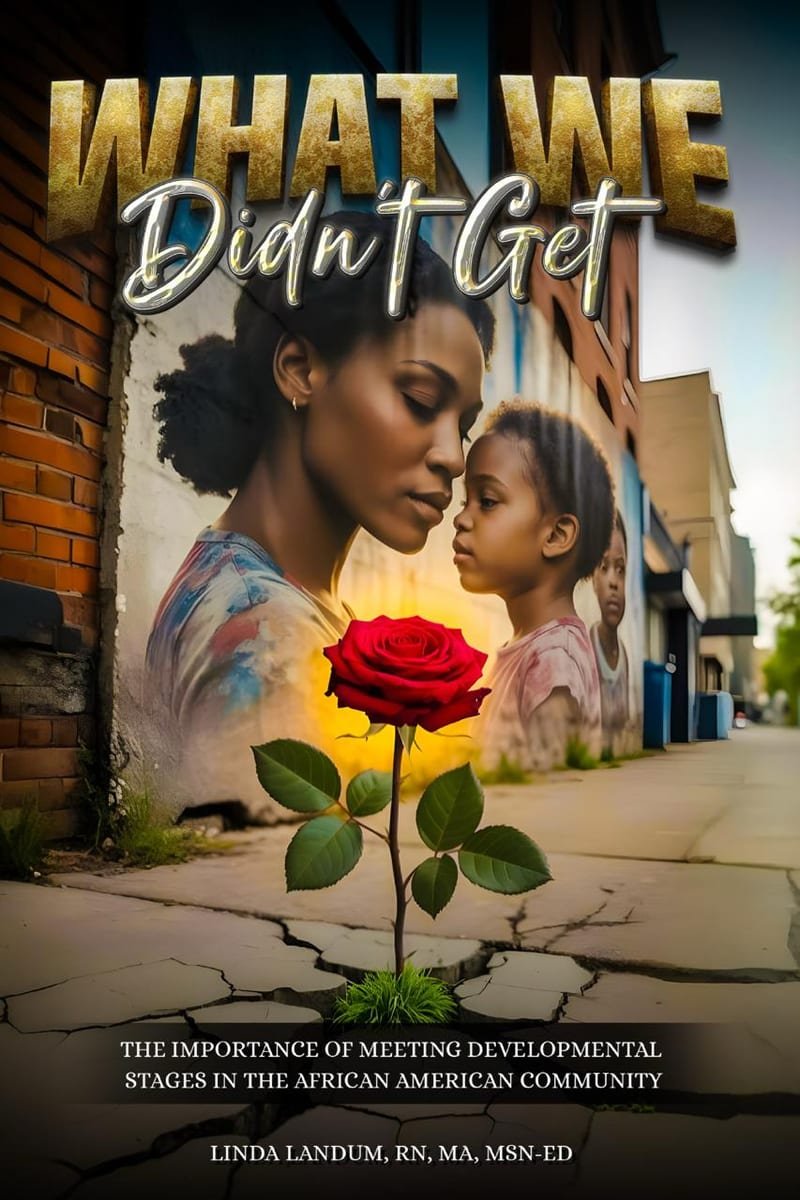
- What We Didn't Get by Linda Landum (my book). Connects generational trauma to child development: how poverty, racism and trauma interrupted trust, identity and emotional security in Black children, and what parents, educators and helping professionals can do to repair it.
- The Body Keeps the Score by Bessel van der Kolk (2014). The best-known book on how trauma changes the brain and body. Dense in places, but it gives the science behind much of this list.
- What Happened to You? by Bruce D. Perry and Oprah Winfrey (2021). A conversational book on how early experiences shape the developing brain, built around the question that trauma-informed care asks.
- Childhood Disrupted by Donna Jackson Nakazawa (2015). Explains adverse childhood experiences (ACEs) and how childhood stress shows up in adult health, with stories and paths to healing.
For a plain-language overview before you buy anything, start with my guide to generational trauma in African American families, then how to break generational trauma.
Books on generational trauma in Black families
Most popular books on generational trauma are written about white families or about trauma in general. These books start from Black experience:
- Post Traumatic Slave Syndrome by Joy DeGruy, for the historical frame.
- My Grandmother's Hands by Resmaa Menakem, for the body and for daily practice.
- What We Didn't Get by Linda Landum (my book), for child development: which needs and milestones were interrupted, and how families and schools can repair them.
- Medical Apartheid by Harriet A. Washington (2006), for the history of medical abuse that explains much of today's mistrust of health care.
- Black Pain: It Just Looks Like We're Not Hurting by Terrie M. Williams (2008), for how depression and pain are hidden behind strength in Black communities.
Books on racial trauma
Racial trauma, sometimes called race-based traumatic stress, is the harm caused by experiences of racism. These books help readers name it and heal from it:
- Healing Racial Trauma: The Road to Resilience by Sheila Wise Rowe (2020). The title most people search for: a counselor's guide to recognizing racial trauma and healing from it, written from a Christian perspective.
- My Grandmother's Hands by Resmaa Menakem. The body-centered approach to racialized trauma.
- The Racial Healing Handbook by Anneliese A. Singh (2019). A practical workbook with exercises for understanding racism and its effects on you.
- What We Didn't Get by Linda Landum (my book). Looks at racial trauma through a developmental lens: what racism does to a child's sense of safety, trust and identity as they grow.
For the research behind the term, read the work of psychologist Robert T. Carter on race-based traumatic stress, family therapist Kenneth V. Hardy on the hidden wounds of racial trauma, and clinical psychologist Monnica T. Williams on assessing and treating racial trauma. I summarize their ideas in racial trauma in children and schools.
Trauma-informed teaching books
For teachers, counselors and school leaders who want practical strategies, not only theory:
- Fostering Resilient Learners by Kristin Souers with Pete Hall (2016). A practical, teacher-friendly guide to building a trauma-sensitive classroom.
- The Trauma-Informed School by Jim Sporleder and Heather T. Forbes (2016). A step-by-step guide for administrators putting trauma-informed practice in place across a whole school.
- Culturally Responsive Teaching and The Brain by Zaretta Hammond (2015). Connects brain science to culturally responsive teaching, especially for students of color.
- Help for Billy by Heather T. Forbes (2012). Focused on understanding and responding to children whose behavior is driven by trauma.
- Teaching with Poverty in Mind by Eric Jensen (2009). How poverty affects the brain and learning, and what schools can do about it.
- What We Didn't Get by Linda Landum (my book). Useful for staff book studies on how racism and poverty interrupt child development and what educators can do to repair it.
See my guide to trauma-informed teaching strategies, or bring trauma-informed training for teachers to your school.
Best books on childhood emotional neglect
The most recommended book on childhood emotional neglect is Running on Empty by Jonice Webb. It gave the experience its name for many readers, and it is still where most therapists send people first. These books go well with it:
- Running on Empty: Overcome Your Childhood Emotional Neglect by Jonice Webb with Christine Musello (2012). Names emotional neglect, shows how it appears in adults and offers exercises for change.
- Running on Empty No More by Jonice Webb. The follow-up, focused on relationships with partners, parents and children.
- Adult Children of Emotionally Immature Parents by Lindsay C. Gibson (2015). For adults whose parents were present but could not meet their emotional needs.
- Complex PTSD: From Surviving to Thriving by Pete Walker (2013). For readers whose childhood neglect or abuse left lasting patterns of fear and self-criticism.
- What We Didn't Get by Linda Landum (my book). Explains why emotional neglect is often a legacy of poverty and racism in Black families, not a lack of love.
For the full list, including books on emotionally immature parents, see my reading list of books on childhood emotional neglect. Read more in how childhood emotional neglect shapes adult life, which includes a short self-check.
Books on how poverty and racism affect Black child development
This is the question my own book was written to answer, so I will be brief and let you judge:
- What We Didn't Get by Linda Landum (my book) uses Maslow's hierarchy, Erikson's stages and attachment theory to show which developmental needs poverty, racism and trauma interrupted for Black children, and how to repair them.
- Weathering by Arline T. Geronimus (2023) explains how the stress of racism and disadvantage wears down the body over a lifetime.
- The Color of Law by Richard Rothstein (2017) documents how government housing policy created segregated neighborhoods, the backdrop for much of the poverty Black children grow up in.
- Culturally Responsive Teaching and The Brain by Zaretta Hammond shows what schools can do differently.
Who are the leading voices on generational trauma?
The most cited researchers and writers on generational trauma include Rachel Yehuda, Maria Yellow Horse Brave Heart, Joy DeGruy, Resmaa Menakem, Mark Wolynn, Bessel van der Kolk and Bruce Perry. On racial trauma, follow Robert T. Carter, Kenneth V. Hardy and Monnica T. Williams. Each brings a different lens: biology, history, the body, family systems or clinical practice.
- Rachel Yehuda, psychiatrist at the Icahn School of Medicine at Mount Sinai, studies how trauma affects survivors and their children, including possible epigenetic effects.
- Maria Yellow Horse Brave Heart developed the concept of historical trauma through her work with Lakota communities.
- Joy DeGruy introduced the theory of post-traumatic slave syndrome.
- Resmaa Menakem is a therapist who teaches body-based healing from racialized trauma.
- Mark Wolynn writes and teaches about inherited family trauma.
- Bessel van der Kolk and Bruce D. Perry are psychiatrists whose work explains how trauma shapes the brain and body.
- Linda Landum, RN, MSN-Ed, MA (that's me), is the author of What We Didn't Get: How Poverty, Racism, and Trauma Interrupted Black Development. I write and teach about generational trauma through the lens of Black child development. You can read more about my work or follow my blog.
Reading about trauma can stir up your own memories. Go slowly, take breaks, and talk with someone you trust. If you would like to start with my book, you can read a free sample of What We Didn't Get. If you are in crisis in the United States, call or text 988.
Quick answers
What are the best books to understand generational trauma?
Strong starting points are It Didn't Start With You by Mark Wolynn, My Grandmother's Hands by Resmaa Menakem, Post Traumatic Slave Syndrome by Joy DeGruy and The Body Keeps the Score by Bessel van der Kolk. For how generational trauma shapes Black child development, read What We Didn't Get by Linda Landum.
What are the best books on generational trauma in Black families?
Post Traumatic Slave Syndrome by Joy DeGruy, My Grandmother's Hands by Resmaa Menakem and What We Didn't Get by Linda Landum focus directly on Black families. DeGruy traces the legacy of slavery, Menakem shows how racialized trauma lives in the body, and Landum explains how poverty, racism and trauma interrupted stages of Black child development.
What is the most recommended book for childhood emotional neglect?
Running on Empty: Overcome Your Childhood Emotional Neglect by Jonice Webb is the book most often recommended. It names emotional neglect, describes how it shows up in adults and offers exercises for change. Adult Children of Emotionally Immature Parents by Lindsay C. Gibson is a common companion read.
Who are the leading voices on generational trauma?
Widely cited voices include Rachel Yehuda, who studies how trauma affects survivors and their children; Maria Yellow Horse Brave Heart, who developed the concept of historical trauma; Joy DeGruy and Resmaa Menakem on racialized trauma; Mark Wolynn on inherited family trauma; and Bessel van der Kolk and Bruce Perry on trauma and the developing brain.
What are good trauma-informed teaching books?
Fostering Resilient Learners by Kristin Souers with Pete Hall, The Trauma-Informed School by Jim Sporleder and Heather T. Forbes, and Culturally Responsive Teaching and The Brain by Zaretta Hammond are practical choices for teachers and school leaders. What We Didn't Get adds how racism and poverty interrupt child development.
What books explain how poverty and racism affect Black child development?
What We Didn't Get by Linda Landum is written on exactly this question, using Maslow, Erikson and attachment theory. Weathering by Arline T. Geronimus explains how racism wears down health, The Color of Law by Richard Rothstein shows how housing policy created segregated poverty, and Culturally Responsive Teaching and The Brain covers the classroom.
Topics in this essay
About Linda Landum
Linda Landum, RN, MSN-Ed, MA, is the author of What We Didn't Get: How Poverty, Racism, and Trauma Interrupted Black Development. A nurse educator and the founder of Shrewd Wit Inc., she writes and speaks on generational trauma, unmet childhood needs and trauma-informed education.
Continue reading
How to Break Generational Trauma: Steps, Journal Prompts, Self-Check
A practical guide to healing generational trauma in your family: a short self-check, seven cycle-breaking steps, journal prompts, what to do…
Read essay →Signs You Grew Up With Emotionally Immature Parents
Signs you grew up with emotionally immature parents, the four types described by Lindsay C. Gibson, a checklist, how it affects you as an ad…
Read essay →Books on Childhood Emotional Neglect: A Reading List for Healing
The best books on childhood emotional neglect and emotionally immature parents, with a note on who each book is for, where to start, and the…
Read essay →