Racial Trauma in Children and Schools: For Educators and Parents
What racial trauma is, how it affects a child's development, the signs to watch for at home and in class, and what trauma-informed schools and families can do about it, drawing on the work of Robert T. Carter, Kenneth V. Hardy and Monnica T. Williams.

Linda Landum, RN, MSN-Ed, MA
Founder, Shrewd Wit Inc.

— Trauma Informed Education
Racial trauma is the emotional, psychological and physical harm caused by experiences of racism. For children, it lands on a body and mind that are still developing. A child who learns early that the world sees them as a threat must spend energy on watchfulness that should go to learning, play and growing up.
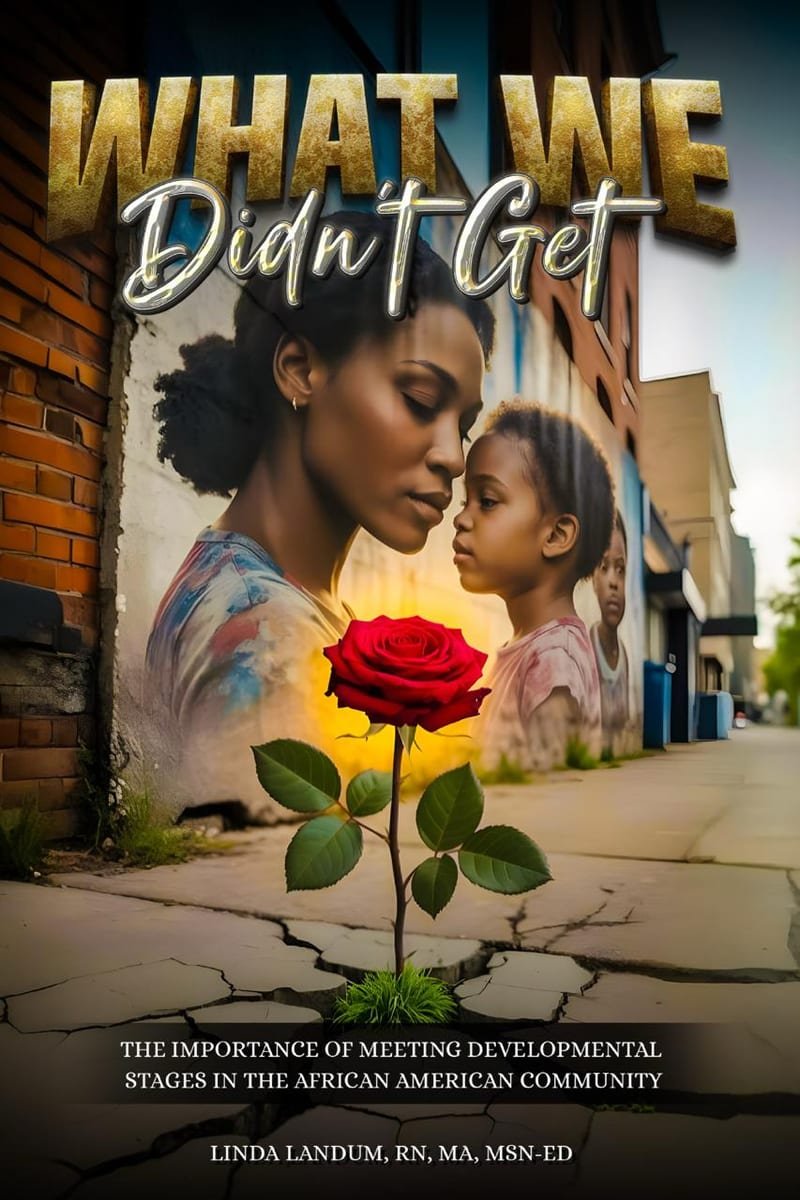
This guide is for teachers, counselors, school leaders and parents. It explains what racial trauma is, how it affects child development, what to look for, and what schools and families can do. It draws on the developmental framework of my book, What We Didn't Get: How Poverty, Racism, and Trauma Interrupted Black Development, and on three researchers whose work defines the field.
What is racial trauma?
Racial trauma, also called race-based traumatic stress, can come from:
- Direct experiences: racial slurs, threats, violence, profiling, or being punished more harshly than peers.
- Repeated everyday racism: microaggressions, low expectations and being treated as suspicious, which add up over time.
- Vicarious experiences: seeing people who look like you harmed, in person or on video.
- Historical and generational harm: the effects of slavery, segregation and discrimination passed down through families, which I explain in generational trauma in African American families.
Three researchers to know
Robert T. Carter: race-based traumatic stress
Psychologist Robert T. Carter argued in 2007 that racism can cause traumatic injury even when the events do not meet the clinical definition required for PTSD. His model of race-based traumatic stress injury gave clinicians a way to take that harm seriously and to assess it.
Kenneth V. Hardy: the hidden wounds
Family therapist Kenneth V. Hardy describes the hidden wounds of racial trauma in young people, including internalized devaluation (absorbing the message that you matter less), an assaulted sense of self, and internalized voicelessness (learning that speaking up does not help, or makes things worse). He urges adults to affirm young people's racial identity, help them name their experiences and make room for the rage that racism produces rather than only punishing it.
Monnica T. Williams: assessing and treating racial trauma
Clinical psychologist Monnica T. Williams and colleagues have developed tools to help clinicians ask about and assess racial trauma, and they argue that therapists need to treat racism as a real cause of harm rather than a client's misperception.
How racial trauma affects child development
Child development depends on a few basic conditions: safety, trust in caring adults, a sense of belonging, and the chance to form a confident identity. Racism attacks each of them.
- Safety. A child who expects to be watched, doubted or harmed lives with a stress response that stays switched on, the pattern described in research on toxic stress.
- Trust. When teachers, police or doctors treat a child unfairly, the lesson is that adults and institutions cannot be relied on.
- Identity. Children notice early how their race is seen. Repeated negative messages can become internalized devaluation, which interrupts the identity work that Erikson's stages describe.
- Childhood itself. Research has found that adults tend to see Black children as older and less innocent than white children of the same age. A 2014 study led by Phillip Atiba Goff found this for Black boys, and a 2017 Georgetown Law report, Girlhood Interrupted, found adults viewed Black girls as needing less nurturing and protection, starting as young as age five. A child denied the protection of being seen as a child loses part of childhood.
The American Academy of Pediatrics recognized this in its 2019 policy statement on the impact of racism on child and adolescent health, which describes racism as a social determinant of health with lasting effects on children's development.
Racial trauma in schools
Schools can protect children from racial trauma or add to it. Discipline is the clearest example. A 2018 report from the U.S. Government Accountability Office found that Black students made up about 15.5 percent of public school students but about 39 percent of students suspended from school. Each suspension removes a child from learning and teaches them that school does not want them there, the beginning of what is often called the school-to-prison pipeline.
Racial trauma at school can also come from slurs and harassment that go unaddressed, curriculum that leaves out or distorts Black history, lower expectations in placement and grading, and staff who read a frightened child's behavior as defiance.
Signs of racial trauma in children
- Anxiety, constant watchfulness or being easily startled.
- Trouble sleeping, stomachaches or headaches, especially before school.
- Irritability, anger or outbursts that seem bigger than the moment.
- Withdrawal, going quiet in class or avoiding certain places or people.
- A drop in grades or in interest in school.
- Negative statements about their skin, hair or race, or wishing to be another race.
These signs overlap with other kinds of stress, which is why the trauma-informed question matters: not "What is wrong with you?" but "What happened to you?"
What educators can do
- Look at your discipline data by race, and treat gaps as a problem to fix, not a description of students.
- Choose co-regulation before correction. A child in fight-or-flight cannot learn from a lecture. See my guide to trauma-informed teaching strategies.
- Replace exclusion with repair. Restorative conversations keep children in school and teach accountability.
- Respond to racist incidents every time, visibly and promptly, so students learn that adults will protect them.
- Teach full histories and let students see themselves in the curriculum.
- Get training that covers both toxic stress and the realities of racism. Shrewd Wit offers trauma-informed training for teachers built on this framework.
What parents and caregivers can do
- Listen first. When your child tells you about an incident, believe them and thank them for telling you.
- Name it. Children cope better when an adult helps them understand that what happened was racism and was not their fault.
- Build pride. Books, history, family stories, art and community give children an identity that racism cannot define.
- Calm the body together. Breathing, movement, music, prayer and time outdoors help a stressed nervous system settle.
- Advocate at school. Ask how the school handles racist incidents and discipline, and put concerns in writing.
- Get support when needed. Look for a culturally responsive therapist through directories such as Therapy for Black Girls, Inclusive Therapists or the Black Emotional and Mental Health Collective (BEAM).
For books on this subject, see my reading list on racial trauma and trauma-informed teaching. For the full developmental picture of how racism and poverty interrupted Black childhood, and how families and schools can repair it, read a free sample of What We Didn't Get.
Sources and further reading
- Carter, R. T. Racism and psychological and emotional injury: Recognizing and assessing race-based traumatic stress. The Counseling Psychologist, 2007.
- Hardy, K. V. Healing the hidden wounds of racial trauma. Reclaiming Children and Youth, 2013.
- Williams, M. T., Metzger, I. W., Leins, C., and DeLapp, C. Assessing racial trauma within a DSM-5 framework: The UConn Racial/Ethnic Stress & Trauma Survey. Practice Innovations, 2018.
- Trent, M., Dooley, D. G., Dougé, J., and the AAP Section on Adolescent Health, Council on Community Pediatrics, Committee on Adolescence. The impact of racism on child and adolescent health. Pediatrics, 2019.
- U.S. Government Accountability Office. K-12 Education: Discipline Disparities for Black Students, Boys, and Students with Disabilities (GAO-18-258), 2018.
- Goff, P. A., Jackson, M. C., Di Leone, B. A. L., Culotta, C. M., and DiTomasso, N. A. The essence of innocence: Consequences of dehumanizing Black children. Journal of Personality and Social Psychology, 2014.
- Epstein, R., Blake, J. J., and González, T. Girlhood Interrupted: The Erasure of Black Girls' Childhood. Georgetown Law Center on Poverty and Inequality, 2017.
This article is for education and is not a substitute for medical or mental health care. If you or a child is in crisis in the United States, call or text 988.
Quick answers
What is racial trauma?
Racial trauma, also called race-based traumatic stress, is the emotional, psychological and physical harm caused by experiences of racism. It can come from a single frightening event, from repeated everyday discrimination, or from seeing people who look like you harmed. Its effects can include anxiety, hypervigilance, anger, shame and physical stress.
What are examples of racial trauma?
Examples include being the target of racial slurs or violence, being harshly disciplined or profiled because of race, repeated microaggressions at school or work, being treated as older or more dangerous than you are, and seeing videos of police violence against people who look like you or your family.
What are the symptoms of racial trauma in children?
Children may show anxiety, hypervigilance, trouble sleeping, stomachaches or headaches, irritability or anger, withdrawal, avoiding school or certain places, a drop in grades, or negative beliefs about themselves and their race. Because these overlap with other conditions, an adult who asks what the child has experienced is essential.
Is racial trauma the same as PTSD?
Not exactly. Racial trauma can produce symptoms like PTSD, but many experiences of racism, such as repeated discrimination, do not meet the event criteria for a PTSD diagnosis. Psychologist Robert T. Carter proposed race-based traumatic stress to describe this harm. A clinician can diagnose PTSD when racism-related events and symptoms meet its criteria.
How can schools reduce racial trauma?
Schools can track and close discipline gaps, replace exclusionary discipline with restorative practices, train staff on racial trauma and implicit bias, reflect students' histories in the curriculum, make it safe to report racist incidents, and connect students with culturally responsive counselors.
How do you heal racial trauma?
Healing usually combines naming the harm as real, calming the body's stress response, connecting with family, faith and community, building racial pride and identity, and, when needed, working with a culturally responsive therapist. For children, the most protective factor is a trusted adult who listens and takes their experiences seriously.
Topics in this essay
About Linda Landum
Linda Landum, RN, MSN-Ed, MA, is the author of What We Didn't Get: How Poverty, Racism, and Trauma Interrupted Black Development. A nurse educator and the founder of Shrewd Wit Inc., she writes and speaks on generational trauma, unmet childhood needs and trauma-informed education.
Continue reading
Generational Trauma in African American Families: Causes and Healing
A plain-language guide to generational trauma in Black families: what it means, the history and research behind it, the best books to start …
Read essay →Generational vs Intergenerational Trauma: Differences and PTSD
Generational, intergenerational, transgenerational, historical and collective trauma explained side by side, plus how generational trauma di…
Read essay →Books on Childhood Emotional Neglect: A Reading List for Healing
The best books on childhood emotional neglect and emotionally immature parents, with a note on who each book is for, where to start, and the…
Read essay →