Generational vs Intergenerational Trauma: Differences and PTSD
Generational, intergenerational, transgenerational, historical and collective trauma explained side by side, plus how generational trauma differs from PTSD, whether it is real, and what it looks like in a family.

Linda Landum, RN, MSN-Ed, MA
Founder, Shrewd Wit Inc.
— Intergenerational Trauma
Generational trauma and intergenerational trauma mean the same thing in everyday use: the effects of trauma passing from one generation to the next. "Intergenerational" is the term researchers use most; "generational" is the more common everyday word. Neither is a diagnosis, which is the key difference from PTSD.
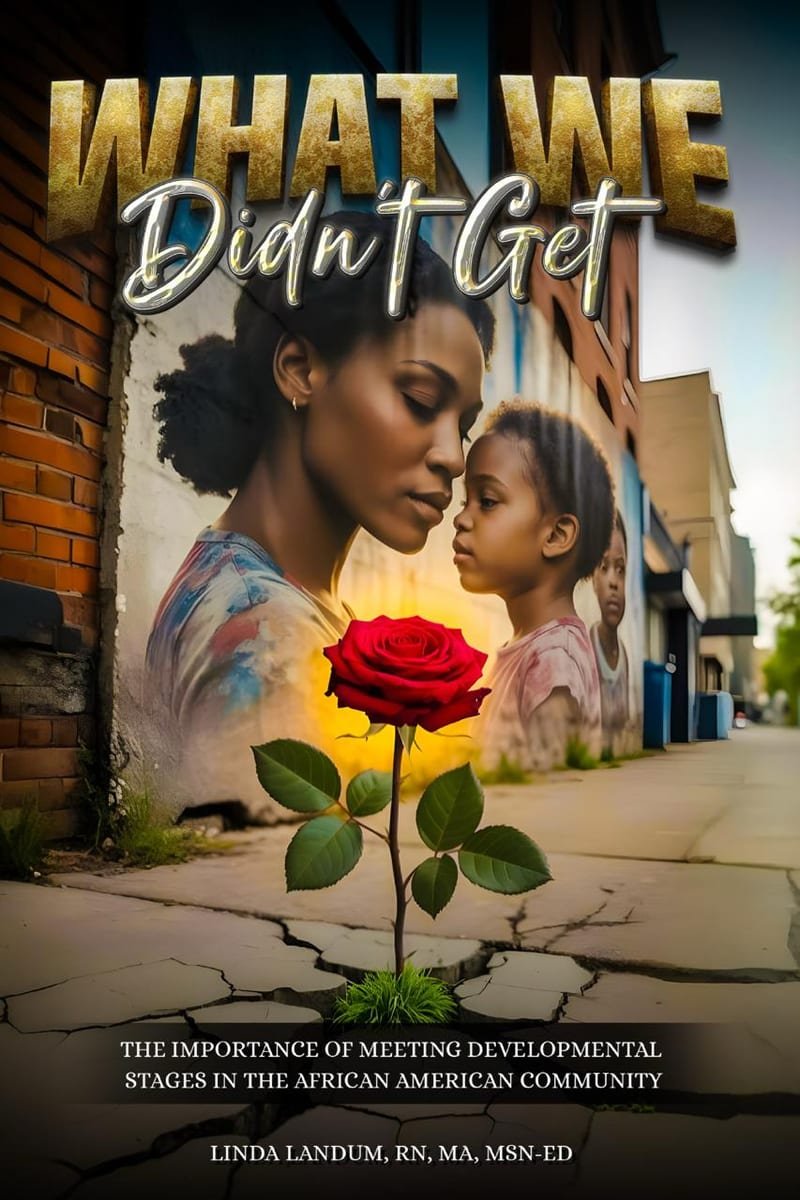
That is the short answer. Below, I explain each term you are likely to meet, how they relate to PTSD, and why the distinctions matter for families, especially Black families, trying to understand what was passed down to them. It draws on the developmental framework of my book, What We Didn't Get: How Poverty, Racism, and Trauma Interrupted Black Development.
What is generational trauma?
Generational trauma is the passing of trauma's effects from people who lived through harm to their children and grandchildren. A parent who survived violence, loss or chronic danger may parent from a body still on alert. Children absorb that alertness, the family's silences and its survival rules, and often live with the consequences of the same unequal conditions. The original events may be decades or centuries old; their effects are present now.
The terms, side by side
- Generational trauma. The everyday term for trauma's effects moving down a family line. It is what most people search for and say.
- Intergenerational trauma. The term most often used in research and clinical writing. In practice it is used interchangeably with generational trauma. Some researchers use it narrowly for effects passed from directly exposed parents to their children.
- Transgenerational trauma. Used, when a distinction is made, for effects that reach grandchildren and later generations who were never exposed to the original events.
- Historical trauma. A concept developed by Dr. Maria Yellow Horse Brave Heart through her work with Lakota communities: cumulative emotional and psychological wounding, across generations, that follows massive group trauma such as genocide, colonization or slavery.
- Collective trauma. The shared harm a whole group experiences from the same events. It becomes generational when the effects pass down and historical when they build across generations.
- Racial trauma. Harm caused by experiences of racism, both historical and present-day. It can be personal, collective and generational at once, which is why I write about it separately in racial trauma in children and schools.
The labels matter less than the idea they share: what happened to earlier generations can shape the lives of later ones, and that shaping can be understood and changed.
Generational trauma vs PTSD: what's the difference?
PTSD (post-traumatic stress disorder) is a clinical diagnosis. Generational trauma is not. The two are related but answer different questions.
- Who it describes. PTSD describes a person who was exposed to a traumatic event themselves, by experiencing it, witnessing it, or learning it happened to someone close to them. Generational trauma also describes people who never experienced the original events.
- What it requires. A PTSD diagnosis, under the DSM-5-TR used by clinicians in the United States, requires exposure to actual or threatened death, serious injury or sexual violence, plus symptoms in four areas (intrusive memories, avoidance, negative changes in mood and thinking, and changes in arousal and reactivity) lasting more than a month and causing real distress or impairment.
- What it explains. PTSD explains one person's symptoms. Generational trauma explains patterns in families and communities: parenting styles, silences, stress, mistrust and unequal conditions handed down over time.
- How they connect. Children of trauma survivors can develop PTSD from their own experiences, and research by Rachel Yehuda and colleagues found that adult children of Holocaust survivors whose parents had PTSD were more likely to develop PTSD themselves. A family's history can raise the risk without being the cause.
If you recognize PTSD symptoms in yourself, a licensed clinician can assess you. Effective treatments include trauma-focused cognitive behavioral therapy, cognitive processing therapy and EMDR.
Is generational trauma real?
Yes. Research consistently shows that the effects of trauma can pass from parents to children. The best-established pathways are not mysterious:
- Parenting under stress. Parents who never felt safe can struggle to offer the calm, responsive attention children need, which is how emotional neglect can happen in loving families.
- Attachment. Early bonds shape how children learn to trust and regulate emotion, as explained in attachment theory.
- The stress response. Children raised around chronic threat often develop stress systems that stay on high alert, a pattern documented in research on adverse childhood experiences and toxic stress.
- Living conditions. Poverty, segregation and discrimination created by earlier generations' circumstances keep producing new stress for each generation.
The part still under debate is biology. Scientists are studying whether severe stress changes epigenetic markers, chemical tags that affect how genes are switched on and off, in ways that pass to children. Animal studies and some human studies suggest it may happen, but the human evidence is early and contested. It is best treated as one possible pathway, not the main explanation.
Generational trauma vs collective trauma
Collective trauma happens to a group at the same time: a war, a genocide, a disaster, slavery. Generational trauma describes what happens next, as the effects move through families. For African Americans, the two are tangled together: slavery, Jim Crow, racial terror and present-day racism are collective traumas whose effects have passed down for generations while new harm continues. That is why I describe Black generational trauma as historical and ongoing at the same time.
Generational curse vs generational trauma
Many families, especially in faith communities, talk about a generational curse: the idea, drawn from passages such as Exodus 20:5, that consequences of sin can visit "the third and fourth generation." Generational trauma describes a similar pattern in psychological terms. The frameworks do not have to compete. Scripture also says that "the son shall not bear the iniquity of the father" (Ezekiel 18:20), and many believers find that understanding trauma gives them practical tools for the freedom their faith promises. Prayer and therapy can work together.
What generational trauma looks like: examples and signs
- Harsh, fear-based discipline handed down as protection, long after the original danger changed.
- A family rule that feelings are not discussed, or that crying is weakness.
- Hyper-independence: never asking for help because help was never reliable.
- Feeling guilty or anxious when resting, or bracing for disaster when life is good.
- Addiction, violence or abandonment repeating across generations.
- Deep mistrust of doctors, schools or police that began with real mistreatment of earlier generations.
- Reacting to your children the way you were reacted to, despite promising yourself you would not.
These are patterns to notice, not symptoms to diagnose. Many began as adaptations that kept earlier generations alive.
Why the developmental lens matters
My work looks at generational trauma through human development. Every child needs safety, trust, belonging and the room to build an identity, as frameworks like Maslow's hierarchy and Erikson's stages describe. When poverty, racism and trauma interrupt those needs in one generation, parents can struggle to meet them in the next. That is the cycle What We Didn't Get explains, and it is also why the cycle can be broken: needs that were missed can still be met.
Ready for the practical side? Read how to break generational trauma, with steps, journal prompts and a self-check, or browse my reading list of books about generational trauma.
Sources and further reading
- American Psychiatric Association. Diagnostic and Statistical Manual of Mental Disorders, Fifth Edition, Text Revision (DSM-5-TR), 2022: criteria for PTSD.
- Brave Heart, M. Y. H. The historical trauma response among natives and its relationship with substance abuse: A Lakota illustration. Journal of Psychoactive Drugs, 2003.
- Yehuda, R., and Lehrner, A. Intergenerational transmission of trauma effects: putative role of epigenetic mechanisms. World Psychiatry, 2018.
- DeGruy, J. Post Traumatic Slave Syndrome: America's Legacy of Enduring Injury and Healing, 2005.
This article is for education and is not a substitute for medical or mental health care. If you are in crisis in the United States, call or text 988.
Quick answers
What is the difference between generational and intergenerational trauma?
In everyday use there is no real difference: both describe the effects of trauma passing from one generation to the next. Intergenerational trauma is the term most researchers use. Some researchers use it narrowly for effects passed from directly exposed parents to their children, and transgenerational trauma for effects that reach grandchildren and later generations.
Generational trauma vs PTSD: what's the difference?
PTSD is a clinical diagnosis for a specific set of symptoms that follow a person's own exposure to a traumatic event and last more than a month. Generational trauma is not a diagnosis. It describes how the effects of trauma travel through a family or community, including to people who never experienced the original events.
Is generational trauma real?
Yes, in the sense that research consistently shows trauma's effects can pass from parents to children through parenting, family stress, attachment and living conditions. What is less settled is whether trauma passes down biologically through epigenetic changes; human studies suggest it may, but the evidence is still early and debated.
What is the difference between generational trauma and collective trauma?
Collective trauma is the shared harm a whole group experiences from the same events, such as war, genocide, slavery or a disaster. Generational trauma describes how effects travel down family lines over time. Collective trauma often becomes generational when it is not acknowledged or healed, which is how historical trauma develops.
What are examples of generational trauma?
Common examples include harsh discipline passed down as protection, families where feelings are never discussed, hyper-independence and difficulty asking for help, addiction or violence repeated across generations, and deep mistrust of doctors, schools or police that began with real mistreatment of earlier generations.
What are the signs of generational trauma?
Signs include patterns that repeat across generations, family rules no one explains, difficulty naming or showing feelings, constant alertness or trouble resting, guilt when life is good, and reacting to children the way you were reacted to. Generational trauma is not a diagnosis, so these are patterns to notice, not symptoms to self-diagnose.
Is a generational curse the same as generational trauma?
They describe similar patterns from different frameworks. A generational curse is a spiritual idea about sin or consequences passing down a family line. Generational trauma is a psychological idea about the effects of harm passing down through parenting, stress and living conditions. Many people of faith find the two complement each other.
Can generational trauma be passed down through genes?
Not through changes to the genetic code. Researchers such as Rachel Yehuda study whether severe stress changes epigenetic markers that affect how genes are expressed in survivors' children. Results are intriguing but early and debated. The well-established pathways are parenting, attachment, family patterns and living conditions, and those can change.
Topics in this essay
About Linda Landum
Linda Landum, RN, MSN-Ed, MA, is the author of What We Didn't Get: How Poverty, Racism, and Trauma Interrupted Black Development. A nurse educator and the founder of Shrewd Wit Inc., she writes and speaks on generational trauma, unmet childhood needs and trauma-informed education.
Continue reading

Racial Trauma in Children and Schools: For Educators and Parents
What racial trauma is, how it affects a child's development, the signs to watch for at home and in class, and what trauma-informed schools a…
Read essay →How to Break Generational Trauma: Steps, Journal Prompts, Self-Check
A practical guide to healing generational trauma in your family: a short self-check, seven cycle-breaking steps, journal prompts, what to do…
Read essay →Books on Childhood Emotional Neglect: A Reading List for Healing
The best books on childhood emotional neglect and emotionally immature parents, with a note on who each book is for, where to start, and the…
Read essay →