ACEs Explained: The ACE Test, Types of Childhood Trauma and Toxic Stress
Adverse Childhood Experiences (ACEs) are one of the most important public-health discoveries of the past thirty years. Here is what ACEs are, what toxic stress does to the developing brain, and why trauma-informed care matters — especially in Black communities.

Linda Landum, RN, MSN-Ed, MA
Founder, Shrewd Wit Inc.

— Trauma Informed Care
In 1998, two researchers — Dr. Vincent Felitti and Dr. Robert Anda — published a study that changed medicine. They surveyed more than 17,000 adults about ten categories of childhood adversity and matched their answers to lifelong health outcomes. The findings were staggering. The more adverse childhood experiences (ACEs) a person reported, the higher their risk for heart disease, diabetes, depression, addiction, and early death. Childhood adversity is a public health issue — not a private matter.
The ACE Test: 10 Questions
The standard ACE questionnaire asks about ten experiences before your 18th birthday. Below is a plain-language version. Count one point for each yes. This is a reflection tool, not a diagnosis, and you do not have to share your answers with anyone.
Before you were 18:
- Did a parent or other adult in the home often swear at you, insult you or humiliate you, or act in a way that made you afraid you would be hurt? (emotional abuse)
- Did a parent or other adult in the home often push, grab, slap or hit you, or hit you so hard you had marks or were injured? (physical abuse)
- Did an adult or someone at least five years older ever touch you sexually or make you touch them, or try to have sex with you? (sexual abuse)
- Did you often feel that no one in your family loved you or thought you were important, or that your family did not look out for each other? (emotional neglect)
- Did you often go without enough food or clean clothes, have no one to protect you, or have parents too impaired to care for you or take you to the doctor? (physical neglect)
- Did you lose a parent through separation, divorce, abandonment or another reason? (parental separation)
- Was your mother or stepmother pushed, hit, threatened or otherwise abused in front of you? (domestic violence)
- Did you live with anyone who had a problem with drinking or used street drugs? (household substance use)
- Was a household member depressed or mentally ill, or did a household member attempt suicide? (household mental illness)
- Did a household member go to prison or jail? (incarceration)
Your total, from 0 to 10, is your ACE score. The full questionnaire is free from the CDC and from ACEs Aware (acesaware.org).
What Your ACE Score Means
In the original study, about two in three adults had at least one ACE, and roughly one in eight had four or more. Researchers treat a score of four or more as high, because that is where the risk of heart disease, depression, substance use and other chronic illness rose most sharply.
A score describes risk across large groups of people. It does not predict what will happen to you, and it leaves a lot out:
- It counts events, not severity. One terrifying experience and years of smaller harms can both count as one point.
- It ignores what happened outside the home. Racism, community violence, poverty, bullying, foster care and unsafe neighborhoods are not on the original list. The Philadelphia Urban ACE Study added several of these, and far more people reported at least one.
- It does not count protection. A grandmother who took you in, a teacher who believed in you or a church that held you all lower the risk that adversity becomes lasting harm.
If your score is high, the most useful next step is not worry. It is support: a trauma-informed doctor or therapist, and the protective relationships described at the end of this essay.
Types of Childhood Trauma, With Examples
The ACE list is one way to sort childhood trauma. Clinicians usually group it more broadly:
- Abuse: physical (hitting, beating, harsh punishment that leaves marks), emotional (constant criticism, threats, humiliation) and sexual abuse.
- Neglect: physical (not enough food, clothing, supervision or medical care) and emotional neglect (feelings ignored, no comfort, no one paying attention).
- Household challenges: living with addiction, mental illness, domestic violence, divorce or a parent in prison.
- Community and systemic trauma: neighborhood violence, police violence, chronic poverty and housing instability, and racial trauma from repeated experiences of racism.
- Acute events: serious accidents, natural disasters, the sudden death of a parent or sibling, frightening medical procedures.
- Complex or developmental trauma: several of these at once, repeated over years, often at the hands of the people meant to keep the child safe.
Trauma can also pass between generations, when parents carry unhealed wounds into how they raise their children. I explain how that happens in what is generational trauma.
Why ACEs Disproportionately Affect Black Children
Subsequent studies expanded the framework to include community-level adversity: racism, neighborhood violence, housing instability, food insecurity, and discrimination. When these are included, the burden on African American children rises sharply. This is not a story about Black families being more dysfunctional. It is a story about the cumulative weight of systemic racism on the developing brain.
The Biology of Toxic Stress
Children’s brains are designed to respond to stress. A brief, manageable stressor — a loud noise, a missed step — triggers cortisol and adrenaline, which return to baseline once a caring adult helps the child settle. This is positive stress, and it is part of healthy development.
Toxic stress is different. When stress is severe, prolonged, and not buffered by a safe relationship, cortisol stays elevated. The developing brain reorganizes around survival. The amygdala (the alarm system) grows larger. The prefrontal cortex (the planner) develops more slowly. The hippocampus (memory and context) shrinks. These changes are not character flaws. They are the brain doing exactly what it evolved to do in a dangerous environment.
What This Looks Like in Children
- Difficulty sitting still in school — because the body is bracing.
- Quick emotional flooding — because the alarm system is hair-trigger.
- Trouble making friends — because safe attachment was never modeled.
- Aggression or withdrawal — the two primary survival strategies.
- Chronic stomachaches, headaches, asthma — the body keeps the score.
Effects of Childhood Trauma on Adults
The high-ACE adult often presents not in the therapist’s office but in the cardiologist’s, the gastroenterologist’s, the emergency room. Heart disease, autoimmune conditions, depression, addiction, and chronic pain all carry strong ACE signals. This is why nurses, doctors, and educators must be trauma-informed — because the body has been telling the story all along.
Beyond physical health, adults who lived through childhood trauma often notice:
- Emotional effects: anxiety, depression, numbness, sudden anger or shame that seems out of proportion.
- Relationship effects: trouble trusting people, fear of abandonment, choosing partners who repeat old patterns, or keeping everyone at a distance.
- Thinking and work: difficulty concentrating, perfectionism, burnout, or a constant sense of being on guard.
- Coping that costs: overworking, overeating, drinking or using substances to quiet a nervous system that never learned to settle.
None of these mean a person is broken. They are adaptations that once helped a child survive. If several sound familiar, my guide to signs of childhood emotional neglect in adults and the unmet childhood needs self-check can help you name what was missing.
Trauma-Informed Care: The Antidote
Trauma-informed care does not mean asking every patient or student about their trauma. It means assuming that anyone in front of you may carry some — and acting accordingly. The four R’s, popularized by SAMHSA, summarize the approach:
- Realize the widespread impact of trauma.
- Recognize the signs in patients, students, and colleagues.
- Respond by integrating knowledge of trauma into all practices.
- Resist re-traumatization.
Hope Is Also a Science
Here is the most important sentence in ACE research: ACEs are not destiny. The protective factors that buffer toxic stress are well-documented and within reach: a stable relationship with at least one caring adult, supportive schools, faith and cultural communities, and access to trauma-informed health and mental-health care. Healing is not a luxury. It is a public-health investment.
Knowing your ACE score is not a diagnosis. It is a starting point for trauma-informed self-care, parenting and community work. My book, What We Didn't Get: How Poverty, Racism, and Trauma Interrupted Black Development, looks at the adversities the ACE list leaves out, especially poverty and racism, and what families, schools and helping professionals can do to repair their effects. You can read a free sample first.
Quick answers
What is the ACE test?
The ACE test is a 10-question survey about adverse childhood experiences before age 18: emotional, physical and sexual abuse; emotional and physical neglect; and growing up with domestic violence, substance use, mental illness, parental separation or an incarcerated household member. Each yes counts as one point, giving an ACE score from 0 to 10.
What is a high ACE score?
An ACE score of four or more is generally considered high. In the original CDC-Kaiser Permanente study, people with four or more ACEs had much higher rates of heart disease, depression, substance use and other chronic illness. A high score signals higher risk across a group, not a certain outcome for any one person.
What are the types of childhood trauma?
The main types are abuse (physical, emotional and sexual), neglect (physical and emotional), household challenges such as addiction, mental illness or domestic violence at home, community and systemic trauma such as violence, poverty and racism, acute events like accidents or the death of a parent, and complex trauma, where several of these happen repeatedly over years.
What are examples of childhood trauma?
Examples include being hit or threatened by a caregiver, being constantly criticized or humiliated, sexual abuse, not having enough food or care, feelings being ignored, watching a parent be abused, living with a parent who drank or used drugs, losing a parent to prison, death or abandonment, experiencing racism, and living with neighborhood violence.
How does childhood trauma affect adults?
Childhood trauma raises the risk of heart disease, autoimmune conditions, chronic pain, depression, anxiety and substance use. Many adults also notice trouble trusting people, fear of abandonment, perfectionism, burnout, emotional numbness or sudden anger. These are learned survival responses, and they can change with support.
Is the ACE test accurate?
The ACE test is a reliable screening tool for research and for starting a conversation, but it is not a diagnosis. It counts events without measuring how severe or long-lasting they were, leaves out racism, poverty, bullying and community violence, and does not count protective relationships. Expanded surveys such as the Philadelphia Urban ACE Study add some of these.
Can you heal from a high ACE score?
Yes. ACEs are not destiny. Stable, caring relationships, trauma-informed therapy, physical care for the stress response such as sleep, exercise and breathing practices, and supportive faith and cultural communities all reduce the effects of childhood adversity, in childhood and in adulthood.
Topics in this essay
About Linda Landum
Linda Landum, RN, MSN-Ed, MA, is the author of What We Didn't Get: How Poverty, Racism, and Trauma Interrupted Black Development. A nurse educator and the founder of Shrewd Wit Inc., she writes and speaks on generational trauma, unmet childhood needs and trauma-informed education.
Continue reading

Intergenerational Trauma in Black Families: Breaking the Cycle
Trauma is not just personal — it is inherited. A trauma-informed look at how intergenerational pain travels through Black families, what epi…
Read essay →
Erikson's Eight Stages and the African American Experience
Erik Erikson believed every life moves through eight psychosocial stages, each with a crisis to resolve. What happens when systemic racism, …
Read essay →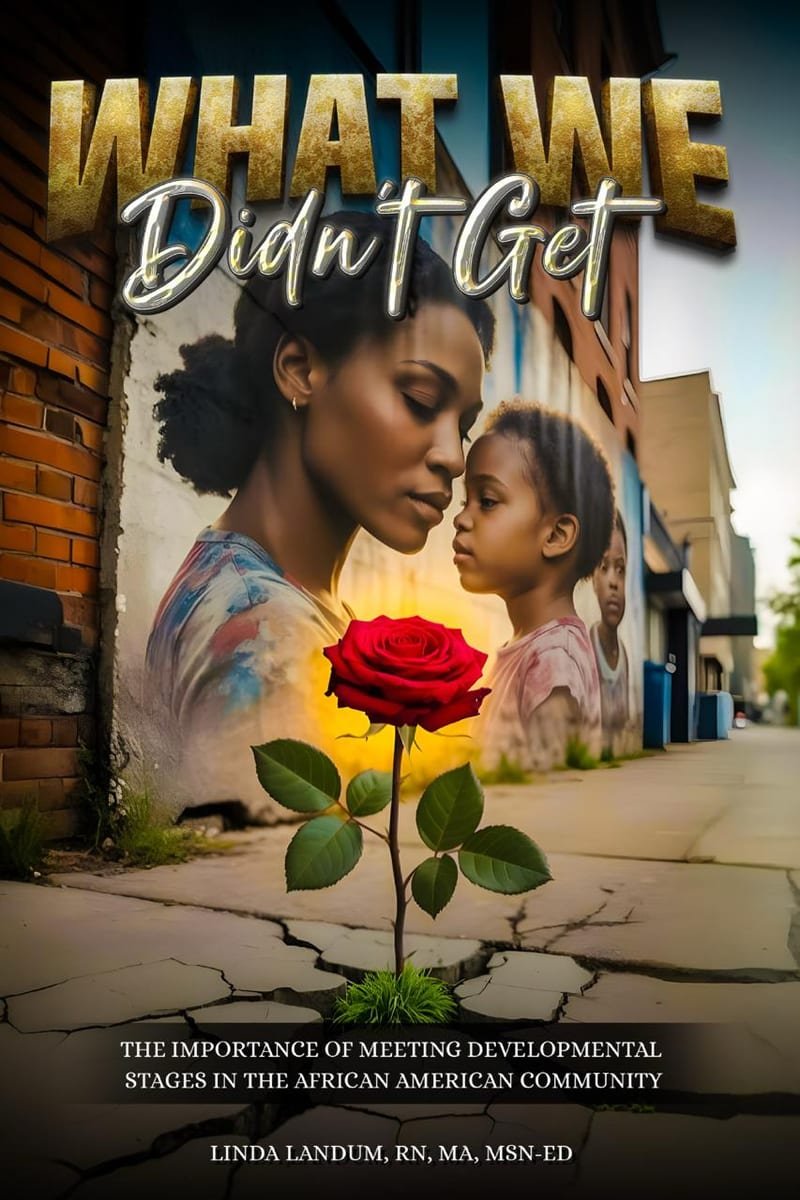
15 Signs of Childhood Emotional Neglect in Adults, With Examples
Fifteen signs of childhood emotional neglect in adults, with everyday examples, a short self-check, what emotional neglect looks like in chi…
Read essay →