Erikson's Eight Stages and the African American Experience
Erik Erikson believed every life moves through eight psychosocial stages, each with a crisis to resolve. What happens when systemic racism, poverty, and intergenerational trauma interrupt those stages? A look at Black child development through Erikson's framework.

Linda Landum, RN, MSN-Ed, MA
Founder, Shrewd Wit Inc.
— Developmental Psychology
Erik Erikson gave the world a developmental map. Across eight stages, from infancy to old age, every human encounters a central psychosocial crisis. Resolved well, that stage builds an inner strength. Resolved poorly, it leaves a developmental gap that the next stages must scaffold over. For African American children growing up in the shadow of systemic racism, several of these crises are made disproportionately harder — not by anything inherent to the child or the family, but by the world the child is born into.
Stage 1 — Trust vs. Mistrust (0–1 year)
The infant’s question is simple: Is the world safe? Will my needs be met? When caregivers can respond consistently, basic trust is formed. But infant mortality rates for Black babies in the United States remain more than twice that of white babies. Maternal mortality follows the same painful pattern. Black mothers often parent under the weight of grief, fear, and exhaustion that white mothers rarely face. Mistrust, when it emerges, is not paranoia — it is accurate pattern recognition.
Stage 2 — Autonomy vs. Shame and Doubt (1–3 years)
The toddler is learning I can. They walk, they say no, they grab, they explore. Healthy resolution requires caregivers who can tolerate exploration. When caregivers are themselves dysregulated by stress, autonomy is often met with sharp correction. Shame becomes the early architecture of self.
Stage 3 — Initiative vs. Guilt (3–6 years)
Children begin to imagine, to play, to lead. In safe environments, this becomes initiative. In environments where Black children are policed early — in preschool, in stores, on sidewalks — initiative is often punished. Studies show Black preschoolers are suspended at rates more than three times their white peers. The body learns: my reach is dangerous.
Stage 4 — Industry vs. Inferiority (6–11 years)
This is the school stage. Children are meant to learn competence — reading, math, social cooperation. Underfunded schools, biased disciplinary practices, and curricula that erase Black history all conspire to substitute inferiority for industry. A child who is told, implicitly, that their history does not matter learns that they do not matter.
Stage 5 — Identity vs. Role Confusion (12–18 years)
The adolescent’s task is identity formation. For Black youth, this stage carries a second job: forging an identity in a culture that constantly mirrors back distorted images. W. E. B. Du Bois called this double consciousness — the experience of seeing oneself through the eyes of a society that does not love you. Healthy identity formation, in this context, is an act of resistance. Mentors, cultural traditions, and affirming community become developmental medicine.
Stage 6 — Intimacy vs. Isolation (18–40 years)
The young adult’s task is to form deep, mutual relationships. When earlier stages — trust, autonomy, identity — are incompletely resolved, intimacy is hard. Add the strain of mass incarceration, housing instability, and the relentless pressure many Black professionals carry in predominantly white workplaces, and intimacy must compete with chronic vigilance.
Stage 7 — Generativity vs. Stagnation (40–65 years)
Middle adulthood asks: Am I contributing to something larger than myself? Generativity is the capacity to invest in the next generation. African American adults often carry extraordinary generativity — raising other people’s children, mentoring, organizing, leading congregations. But unprocessed earlier wounds can turn generativity into compulsive self-sacrifice. The healing task is to keep giving from a full cup, not an empty one.
Stage 8 — Integrity vs. Despair (65+ years)
Late adulthood looks back. The well-resolved life finds integrity — the sense that one’s life, with all its hardship, made sense and mattered. African American elders carry a wisdom forged in fire. Honoring them, listening to them, recording their stories is not sentimentality — it is developmental work for the whole community.
What This Framework Teaches Us
Erikson’s model reminds us that development is not a single moment but a sequence of doors. When a door is closed early — by poverty, racism, neglect, or loss — the next doors do not vanish. They simply become harder to open without help. That help is the work of trauma-informed parenting, education, and community. Every adult who repairs a missed stage is not just healing themselves; they are reopening doors for the children who will follow.
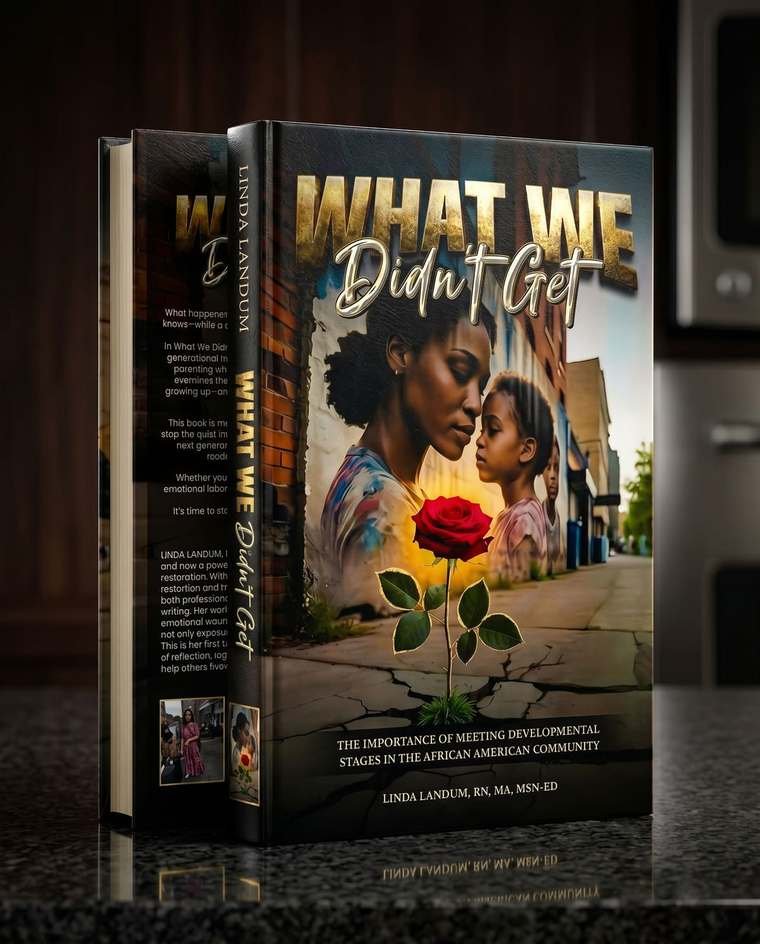
Want to go deeper into how developmental psychology meets the Black American experience? Linda Landum’s book What We Didn’t Get traces these stages through real stories, scholarship, and a clear-eyed framework for healing.
Topics in this essay
About Linda Landum
Linda Landum, RN, MSN-Ed, MA, is the author of What We Didn't Get: How Poverty, Racism, and Trauma Interrupted Black Development. A nurse educator and the founder of Shrewd Wit Inc., she writes and speaks on generational trauma, unmet childhood needs and trauma-informed education.
Continue reading
ACEs Explained: The ACE Test, Types of Childhood Trauma and Toxic Stress
Adverse Childhood Experiences (ACEs) are one of the most important public-health discoveries of the past thirty years. Here is what ACEs are…
Read essay →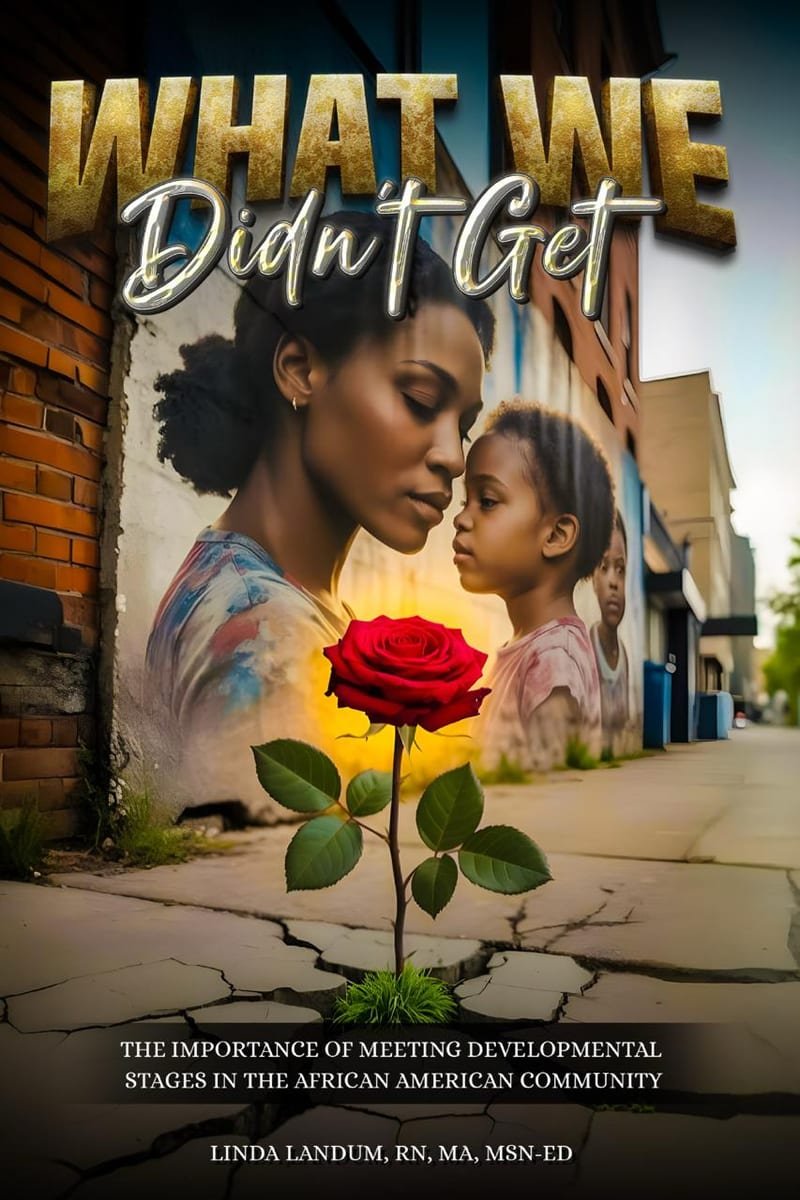
How Childhood Emotional Neglect Shapes the Adult You Become
Childhood emotional neglect leaves no visible scars — but it leaves a shape. Here is how emotional neglect quietly reshapes adult relationsh…
Read essay →15 Signs of Childhood Emotional Neglect in Adults, With Examples
Fifteen signs of childhood emotional neglect in adults, with everyday examples, a short self-check, what emotional neglect looks like in chi…
Read essay →