Best Books for Black History Month: A Reading List for Adults
Black History Month books to read this February: where to start, the classics, big-picture histories, memoirs, novels, and the books that connect Black history to Black health, family life and healing.
From the author of What We Didn't Get. Read a free sample ↓

Linda Landum, RN, MSN-Ed, MA
Founder, Shrewd Wit Inc.
— Reading Lists
The best books for Black History Month do more than list famous names. They show how history lives on in families, bodies, neighborhoods and children today. This reading list is for adults who want to go deeper this February: the classics, the big histories, and the books that connect Black history to Black health, family life and healing.
A note on honesty: I wrote one of the books on this list, What We Didn't Get: How Poverty, Racism, and Trauma Interrupted Black Development, and I say so where it appears. Every other title is here because I find it valuable. I do not use affiliate links.
Where to start if you read only three
- The Warmth of Other Suns by Isabel Wilkerson (2010). The story of the Great Migration told through three people who left the South. It reads like a novel and explains how so many Black families came to be where they are.
- The Fire Next Time by James Baldwin (1963). Two short essays, one a letter to his nephew, that are still among the clearest writing on race in America.
- My Grandmother's Hands by Resmaa Menakem (2017). Connects history to the body: how racialized trauma is carried and how it can be healed.
Classic Black history books everyone should read
- Narrative of the Life of Frederick Douglass, an American Slave (1845). Douglass's own account of slavery and escape, and of how literacy became freedom.
- Incidents in the Life of a Slave Girl by Harriet Jacobs (1861). A woman's account of slavery, including the threats to mothers and children that men's narratives often left out.
- The Souls of Black Folk by W. E. B. Du Bois (1903). The book that named "double consciousness," the sense of always seeing yourself through others' eyes.
- The Fire Next Time by James Baldwin (1963). Short, urgent and still current.
Big-picture histories
- The Warmth of Other Suns by Isabel Wilkerson (2010). The Great Migration, 1915 to 1970.
- Four Hundred Souls, edited by Ibram X. Kendi and Keisha N. Blain (2021). Four hundred years of African American history told by ninety writers, each covering five years. Easy to read a few pages at a time.
- Stamped from the Beginning by Ibram X. Kendi (2016). The history of racist ideas in America, and how they were used to justify inequality.
- The Color of Law by Richard Rothstein (2017). How government policy created segregated neighborhoods, which shaped Black family wealth, schools and health for generations.
- The New Jim Crow by Michelle Alexander (2010). How mass incarceration has affected Black families and communities.
Books that connect Black history to health and healing
This is the part of Black history that rarely makes the February posters: what centuries of slavery, segregation and poverty did to bodies, minds and family life, and how people heal.
- Post Traumatic Slave Syndrome by Joy DeGruy (2005). The foundational book on how the trauma of slavery and continued oppression echoes in African American life.
- My Grandmother's Hands by Resmaa Menakem (2017). Racialized trauma in the body, with daily practices for settling the nervous system.
- Medical Apartheid by Harriet A. Washington (2006). The history of medical experimentation on Black Americans, and why mistrust of health care runs deep.
- Black Pain: It Just Looks Like We're Not Hurting by Terrie M. Williams (2008). How depression and pain hide behind strength in Black communities.
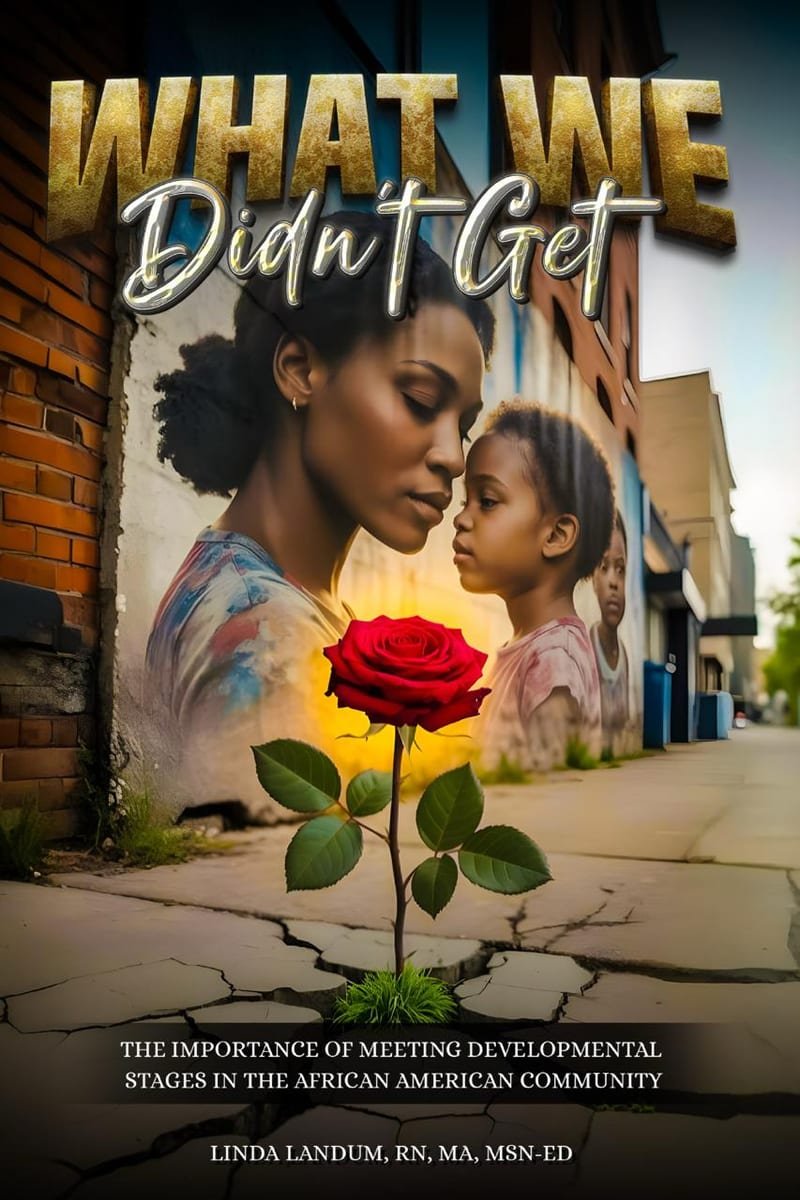
- What We Didn't Get by Linda Landum (my book). Looks at Black history through child development: how poverty, racism and trauma interrupted trust, identity and emotional security in Black children, why so many grew up fed and protected but emotionally unseen, and how families, educators and helping professionals can repair it.
For more on these ideas, read my guides to generational trauma in Black and African American families and racial trauma in children and schools.
Memoirs and essays about Black family life
- Between the World and Me by Ta-Nehisi Coates (2015). A father's letter to his teenage son about living in a Black body in America.
- Heavy: An American Memoir by Kiese Laymon (2018). A son writes to his mother about love, body, violence and the things families do not say.
- Why Are All the Black Kids Sitting Together in the Cafeteria? by Beverly Daniel Tatum (1997, updated 2017). A psychologist explains how racial identity develops in children and teens. Especially useful for parents and teachers.
Novels that teach history
- Beloved by Toni Morrison (1987). A mother, a ghost and the long aftermath of slavery.
- Kindred by Octavia E. Butler (1979). A modern Black woman is pulled back in time to a Maryland plantation.
- Their Eyes Were Watching God by Zora Neale Hurston (1937). One woman's search for her own voice in the early twentieth-century South.
For teachers and school book studies
If your school or staff is planning a Black History Month book study, choose something that changes practice, not only knowledge. Why Are All the Black Kids Sitting Together in the Cafeteria? and Culturally Responsive Teaching and The Brain by Zaretta Hammond (2015) both work well. What We Didn't Get was written partly for educators and includes what schools can do to support children affected by poverty and racial trauma. See my guide to trauma-informed teaching, or bring trauma-informed training for teachers to your school.
How to make Black History Month reading stick
- Pair a history with a memoir. The facts land differently when you also hear one family's story.
- Read with someone. A friend, a book club, a church group or your teenager.
- Ask your elders. Your own family history is part of Black history. Ask where they grew up, what they saw, what they were proud of.
- Keep going in March. The best reading lists are year-round.
Looking for more? See my reading lists of books about generational trauma and books on childhood emotional neglect, or start with the free sample of What We Didn't Get.
Quick answers
What are the best books to read for Black History Month?
Good places to start are The Warmth of Other Suns by Isabel Wilkerson, The Fire Next Time by James Baldwin and My Grandmother's Hands by Resmaa Menakem. For classics, read Frederick Douglass's Narrative and The Souls of Black Folk by W. E. B. Du Bois. For a broad history, try Four Hundred Souls, edited by Ibram X. Kendi and Keisha N. Blain.
What is a good Black History Month book for a book club?
Four Hundred Souls works well because each chapter is short and covers a different five-year period. The Warmth of Other Suns reads like a novel and sparks family conversations. For a club interested in health and healing, What We Didn't Get by Linda Landum or My Grandmother's Hands lead naturally into discussion of how history shapes families today.
Are there Black History Month books about Black mental health?
Yes. Post Traumatic Slave Syndrome by Joy DeGruy, My Grandmother's Hands by Resmaa Menakem and Black Pain by Terrie M. Williams all connect history to mental and emotional health. What We Didn't Get by Linda Landum explains how poverty, racism and trauma interrupted Black child development and how families can repair it.
What should teachers read for Black History Month?
For a staff book study, Why Are All the Black Kids Sitting Together in the Cafeteria? by Beverly Daniel Tatum and Culturally Responsive Teaching and The Brain by Zaretta Hammond both change classroom practice. What We Didn't Get by Linda Landum was written partly for educators and covers how schools can support children affected by poverty and racial trauma.
Topics in this essay
About Linda Landum
Linda Landum, RN, MSN-Ed, MA, is the author of What We Didn't Get: How Poverty, Racism, and Trauma Interrupted Black Development. A nurse educator and the founder of Shrewd Wit Inc., she writes and speaks on generational trauma, unmet childhood needs and trauma-informed education.
Continue reading
Inner Child Work: What It Is, Exercises and How It Helps You Heal
What inner child work is, where the idea comes from, what it helps with, signs your inner child is hurting, and gentle exercises to start, w…
Read essay →Holiday Stress With Family: How to Cope When Old Childhood Wounds Return
Why going home for the holidays can pull you back into your childhood role, and practical ways to cope: a plan for the visit, boundary scrip…
Read essay →How to Reparent Yourself: Healing Unmet Childhood Needs as an Adult
What reparenting is, how it differs from inner child work, signs you may need it, and practical steps and exercises for giving yourself the …
Read essay →