Survival-Based Parenting: How Chronic Stress Can Shape Family Life
When safety, money, time, or support are scarce, parenting may organize around immediate protection. Understanding that context can reduce shame while making room for connection and repair.
In brief
In brief
When safety, money, time, or support are scarce, parenting may organize around immediate protection. Understanding that context can reduce shame while making room for connection and repair.
What this article covers
- Survival-based parenting describes context and priorities; it is not a diagnosis.
- Chronic strain can narrow attention toward immediate safety and practical demands.
- Protective rules may help in one environment while carrying emotional costs in another.
- Predictability, explanation, listening, and repair can strengthen connection without ignoring real danger.
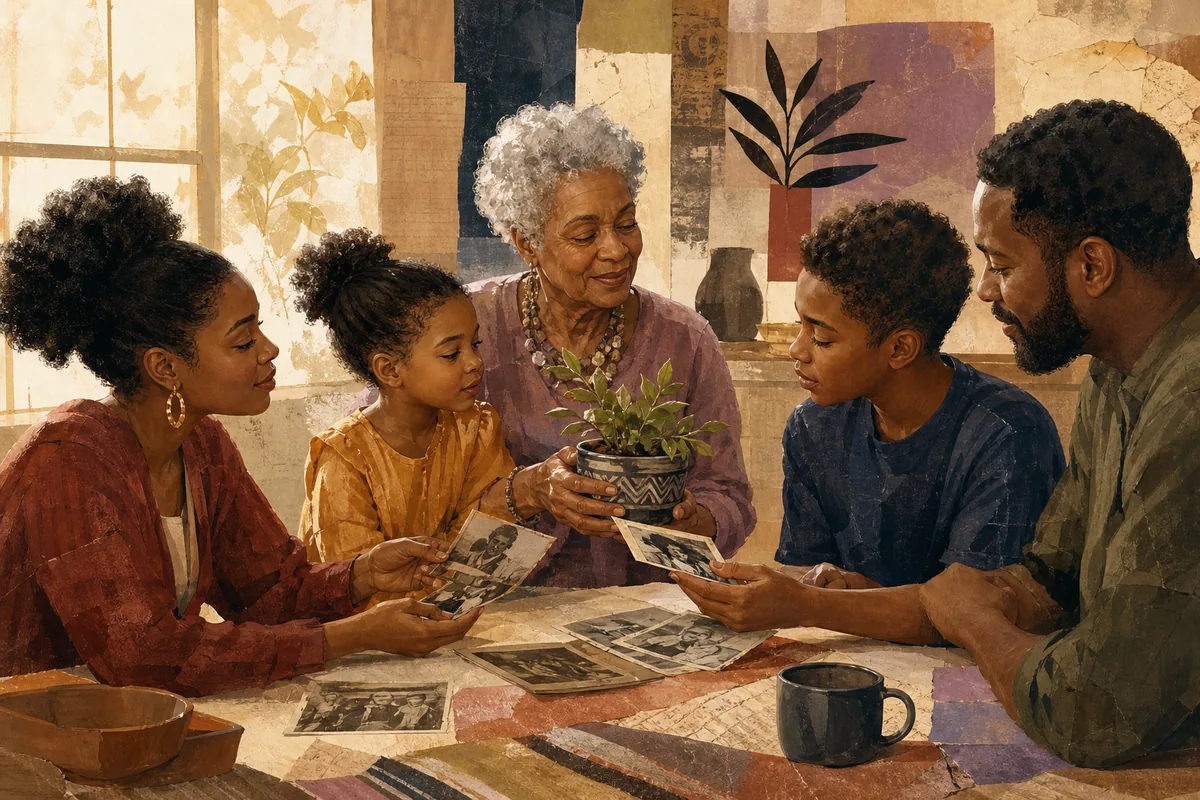
Some families do not have the luxury of parenting as if the world is reliably safe. A caregiver may be managing unstable work, housing, illness, community violence, discrimination, or the consequences of their own childhood. Attention moves toward the next urgent need.
“Survival-based parenting” is a descriptive phrase, not a clinical diagnosis or a formal parenting style. It names a common tension: practices designed to protect a child under pressure may leave less room for emotional explanation, exploration, or mutual problem-solving.
What survival pressure can change
Chronic stress consumes time and mental bandwidth. A caregiver may become more directive because a child's quick compliance feels connected to safety. Emotions may be postponed because bills, transportation, meals, or another crisis cannot wait. Affection may be expressed through sacrifice and provision more often than conversation.
Possible family rules include:
- Do not draw attention to yourself.
- Be strong; there is no time to fall apart.
- Adults make decisions and children obey.
- Keep family problems inside the family.
- Achievement creates safety and options.
Each rule may contain protective wisdom. Each can also become too broad. “Pay attention in unsafe situations” is different from “your feelings and questions never matter.”
How children may adapt
Some children become watchful, quiet, highly responsible, or focused on performance. Others protest, withdraw, or struggle with transitions. These behaviors do not reveal a single cause. They may reflect temperament, development, stress, disability, relationships, or current circumstances.
The useful question is not “What is wrong with this child or parent?” It is “What demand is this family carrying, and what support is missing?”
Protection and emotional connection can coexist
Explain the rule
“Stay close to me in this store because I need to see you” teaches more than “because I said so.” Explanation does not surrender adult responsibility; it helps a child build judgment.
Name the child's experience
A boundary can remain firm while emotion is recognized: “You are disappointed. We still have to leave.” Validation means the feeling makes sense, not that every request will be granted.
Create one predictable point of connection
Consistency can be small: ten minutes after dinner, a bedtime question, music in the car, a weekly walk, or a check-in after school. The goal is a repeated signal that the relationship has room for the child's inner life.
Repair after pressure spills over
Caregivers will miss moments. Repair can be direct: “I was scared and I shouted. The rule mattered, and I want to explain it without frightening you.” Repair teaches that authority can include accountability.
Families need material support, not only better advice
Parenting guidance cannot substitute for safe housing, healthcare, childcare, transportation, fair work, or freedom from discrimination. CDC's ACE-prevention approach includes strengthening economic supports and creating safe, stable, nurturing environments. That is a reminder to place responsibility on systems as well as individuals.
For the wider context around a child, read Bronfenbrenner's ecological model. Organizations can also explore Shrewd Wit's trauma-informed workshops.
Sources
Scope note: This article offers education and reflection, not a diagnosis or a substitute for individual medical or mental-health care. People with similar childhood experiences can have very different adult lives.
About this article
Reviewed July 26, 2026. This educational article does not diagnose or replace individual medical or mental-health care. Research links appear in the article where factual claims are discussed.
Read our editorial standards
Continue with Linda Kamal
Linda Kamal, RN, MSN-Ed, MA, is the founder of Shrewd Wit Inc. and author of What We Didn't Get, a trauma-informed exploration of unmet childhood needs, human development, and family healing.
Continue reading
Emotional Suppression in Black Families: Protection, Cost, and Change
Emotional restraint is not a single “Black family trait.” It can reflect personality, culture, faith, gender expectations, racism, and survival. Families can honor protection while expanding emotional choice.
Read articleIntergenerational Trauma in Black Families: How Patterns Travel and Change
Trauma can affect later generations through family relationships, stress, silence, material conditions, and ongoing discrimination. Human epigenetic inheritance remains an emerging—not settled—explanation.
Read article
Poverty, Racial Stress, and Child Development: A Wider Lens
Children do not experience poverty or racism as abstract social issues. These conditions can shape housing, schools, caregiver stress, safety, health, and opportunity—while relationships and community strengths remain protective.
Read article