Emotional Suppression in Black Families: Protection, Cost, and Change
Emotional restraint is not a single “Black family trait.” It can reflect personality, culture, faith, gender expectations, racism, and survival. Families can honor protection while expanding emotional choice.
In brief
In brief
Emotional restraint is not a single “Black family trait.” It can reflect personality, culture, faith, gender expectations, racism, and survival. Families can honor protection while expanding emotional choice.
What this article covers
- Black families are diverse; no single emotional style defines them.
- Restraint may be shaped by safety, racism, gender roles, faith, generation, and family history.
- A protective practice can become costly when no safe context for expression exists.
- Change can mean adding choice and language, not rejecting strength, privacy, or culture.
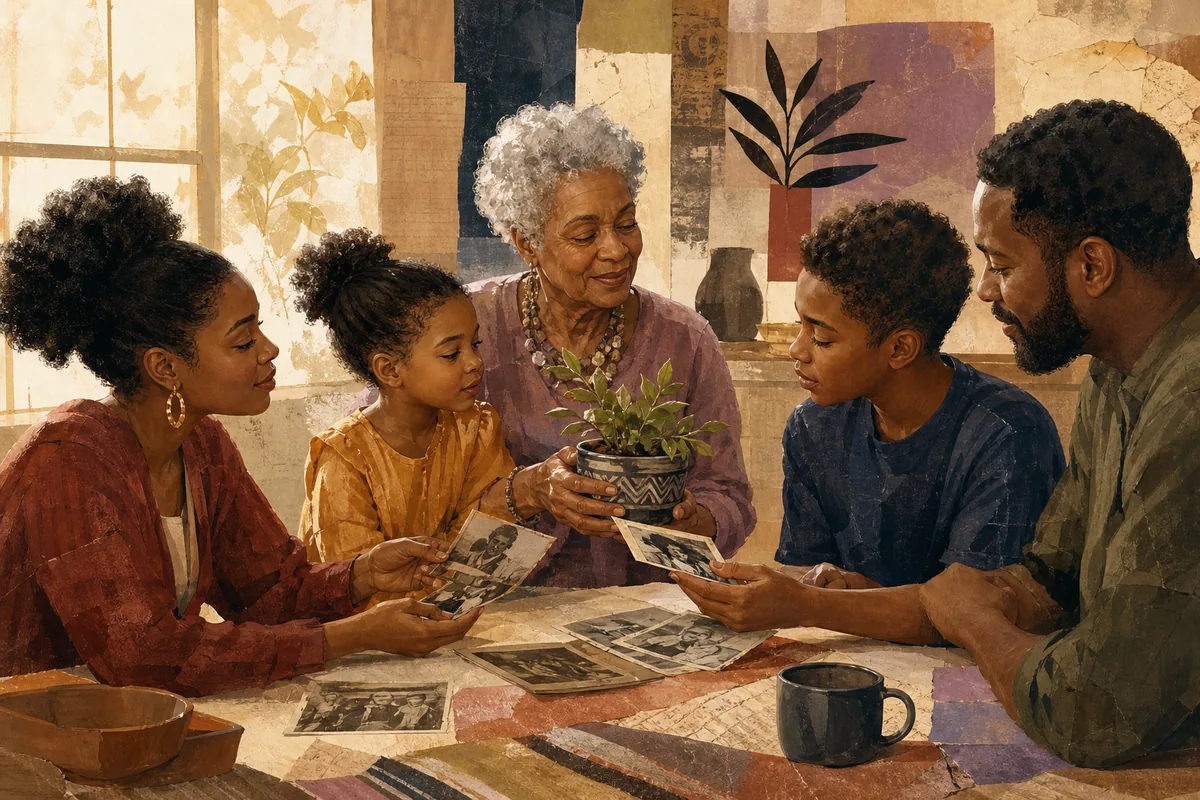
Statements such as “Black families do not talk about feelings” turn a complex history into a stereotype. Black families hold many emotional traditions: direct speech, privacy, prayer, humor, storytelling, music, communal care, tenderness, discipline, and silence. The question is not whether one style is universally Black. It is what a particular family learned emotion was for—and what it cost.
Why restraint can be protective
In environments where Black emotion is misread or punished, control may reduce danger. Parents may teach children to remain composed with authority, at school, or in public because bias makes ordinary behavior carry unequal consequences. A caregiver may discourage tears because vulnerability was exploited in their own life. Strength may be connected with dignity, survival, faith, and responsibility.
These lessons can contain care. They also deserve context. Research links racial discrimination with poorer average mental-health outcomes in children and adolescents, while family-centered interventions suggest that protective caregiving can buffer some effects. Protection is real; so is the need for places where vigilance can soften.
When suppression becomes costly
Emotion regulation means influencing how emotion is understood and expressed. Suppression is one strategy. It can be useful during a dangerous or badly timed moment. A problem arises when it becomes the only available strategy.
A family may notice:
- sadness appearing mainly as irritation or physical exhaustion;
- children hiding problems to avoid burdening adults;
- care expressed through action but rarely spoken or received;
- conflict ending in silence rather than repair;
- strength defined as never needing help;
- different rules for boys, girls, and gender-diverse children.
None of these signs proves neglect or trauma. They are invitations to ask where expression is safe, how the family responds, and whether everyone has enough choice.
Expand the repertoire without rejecting culture
Make context explicit
Instead of “never show fear,” try: “Some people may not treat your feelings fairly. At home, you can tell me what happened.” This preserves safety information and creates a place for processing.
Add emotion to existing traditions
Conversation does not have to resemble a therapy session. Feelings can enter prayer, music, cooking, walking, storytelling, or the drive home. Use the forms of connection the family already trusts.
Let strength include support
Strength can mean asking early, resting before collapse, grieving with community, apologizing, or allowing a child to see an adult solve a problem with help.
Do not force disclosure
Emotional openness requires consent. Ask whether someone wants listening, advice, practical help, prayer, or space. Respecting privacy can coexist with making support available.
A family conversation starter
Ask: What feelings were safe to show in the family that raised you? Which were discouraged? What did those rules protect? What would we like children in this family to learn now?
What We Didn't Get explores how history, social conditions, and unmet needs can shape family behavior without reducing Black families to damage. For a related guide, read intergenerational trauma and family cycle-breaking.
Research sources
- Systematic review: racial discrimination and child and adolescent health
- Family-centered prevention and discrimination-related mental health risk in Black adolescents
Scope note: This article offers education and reflection, not a diagnosis or a substitute for individual medical or mental-health care. People with similar childhood experiences can have very different adult lives.
About this article
Reviewed July 26, 2026. This educational article does not diagnose or replace individual medical or mental-health care. Research links appear in the article where factual claims are discussed.
Read our editorial standards
Continue with Linda Kamal
Linda Kamal, RN, MSN-Ed, MA, is the founder of Shrewd Wit Inc. and author of What We Didn't Get, a trauma-informed exploration of unmet childhood needs, human development, and family healing.
Continue reading
Intergenerational Trauma in Black Families: How Patterns Travel and Change
Trauma can affect later generations through family relationships, stress, silence, material conditions, and ongoing discrimination. Human epigenetic inheritance remains an emerging—not settled—explanation.
Read articleSurvival-Based Parenting: How Chronic Stress Can Shape Family Life
When safety, money, time, or support are scarce, parenting may organize around immediate protection. Understanding that context can reduce shame while making room for connection and repair.
Read article
Poverty, Racial Stress, and Child Development: A Wider Lens
Children do not experience poverty or racism as abstract social issues. These conditions can shape housing, schools, caregiver stress, safety, health, and opportunity—while relationships and community strengths remain protective.
Read article